 |
| Musarrat Nazir
This is the second edition of this post.
The first (longer) one was deleted forever by accident.
When I first arrived in Pakistan I knew
nothing about Pakistani music. I couldn’t name a single singer or musician. My
life long love for that country’s music came through Musarrat Nazir, whose rendition of the Punjabi folk song Mera Laung Gawaacha (My Missing Nose
ring) was a huge mid-80s hit.
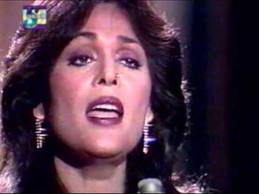
As soon as she entered the tinsel foray,
she was dubbed Pakistan’s first sex symbol, both for her voluptuous figure,
beautiful face and springy, sexy gait. She enhanced this screen persona with
close fitting outfits that included saris with low necked and torso baring
blouses and an acting style that was vigorous, replete with nakhra tinged
gesticulation. When she made her foray into films there were only three
reigning divas that regularly made movies amid a sea full of hopefuls. These
included the queen bee Noor Jehan,
Yasmin and Sabiha. It was with
the latter that Musarrat developed a
rivalry, and often faced off with her new adversary. If Sabiha completed three films in one year, then Musarrat made damn sure she made four.

Because of her glamorous appeal and
daring outfits, Musarrat often got
on the wrong side of the censors during the 50′s and 60′s. In director S. Suleiman’s 50′s hit Baghi with
Sudhir, Musarrat was chastised by
the censors for showing too much cleavage. In the 60′s, the censors blanched at
her performance in Munawwar
Rashid’s Bahadur with Darpan.
Other successful and memorable films in Musarrat’s
repertoire were Gulfam with Darpan and Thandi Sadak with Kamal. The ever provocative siren also dared to act with a much
younger actor Ejaz, in 1959 Raaz,
a successful mystery film.

Musarrat ended her film career in 1965, married Dr. Arshad Majeed, and moved to Canada. She briefly returned to
Pakistan in the late `70s, but not sure what she would do here returned to the
land of frost. Her return to Pakistan in 1983 was momentous. For one, she
looked sensational, with dewy skin, layered hair and deeply kohled beautiful
eyes. The glamorous singer appeared on `The Tariq Aziz Show’ and re-wooed
audiences with the hauntingly lilting Chaley to kat hi jae ga. Her
ongoing popularity during this period (1983-85) made the peripatetic star a
permanent resident of Lahore.
During the 1980s her nasal lilting voice
was ubiquitous at many mehndi
ceremonies, especially her hitsLoang Gawancha (1983) and Jogi (1985).
However after a few public and tawdry drunken episodes, Dr Arshad Majeed whisked his wife back to Canada. (http://cineplot.com/mussarat-nazir/)
This collection of Punjabi songs is
really good showing off Musarrat’s
many vocal skills.
 
Track Listing:
01 Chitti Meri Veeni
02 Ae Choorra Mendey Sajna
03 Kanwa We Kanwa
04 Janda Hoya Das Na Gaya
05 Main Hijr Wichhorra
06 Kachcha Challa
07 Nika Mota Bajra
08 Lathe De Chadar
09 Main Kamli Da Dhola
10 Kut Kut Bajra
11 Choorri Garan Di
12 Kerra Ain Way Toon
13 Kivain Ruthrra Yaar
14 Mera Laung Gawacha
15 Meri Banh Te Likha De
16 Haye O Mere Dadhia Rabba (Madhaniyan)
Listen here
|
Monday, November 14, 2011
Punjabi Chantuese: Musarrat Nazir (refreshed link)


Saturday, November 12, 2011
The Wonder That Was Sindh: Mohammad Rafi and Ram Panjwani (Link updated)

Jhulelal, Sindhi Community Diety
Mohammad Rafi was
one of the holy trinity of Indian playback singers that genuinely formed the
soundtrack to India’s first thirty years of Independence. From the late 40’s to
the late 70’s Rafi’s voice along
with those of Lata Mangeshkar and Kishore Kumar filled not only every cinema but bounced off every narrow gali, blasted from every café and
barbershop and wedding celebration across India. And beyond, to Russia, the
Middle East and Africa.
 |
| Mohammad Rafi |
Born near Amritsar but raised in Lahore Rafi was an improbable superstar. His family was not a traditional
musical one and though he began singing publicly at a young age it was not
until he moved to Bombay in the early 1940s that he received training from some
of the greats of Indian khayal
including Ustad Bade Ghulam Ali Khan. But
what he lacked in pedigree he made up for in capability. His first film work was in 1944. Four years
later he was invited by the first PM of India, Jawaharlal Nehru, to sing
at his home.
From then on film work increased with Rafi recording thousands of songs for the Bollywood musical
directors. Some, such as O.P Nayyar,
Naushad and Shankar-Jaikishan
used Rafi almost exclusively at
various stages in their own glorious careers.
I’ve posted some of Rafi
sahib’s film work before and more
will come. But tonight’s post is a record of devotional and spiritual music
sung in Sindhi. As such it is a delightful detour away from
the filmi world with which he is
almost always associated.
The lyrics of these songs comes from some of Sindh’s great
folk and mystical poets: Bulleh Shah,
Shah Latif and Dharamdas. The
music is composed by one of Sindh’s most beloved patriots Dr Ram Panjwani. He’s pictured on the front of the album with Rafi.
 |
| Ram Panjwani (playing drum) |
Panjwani was born in Larkana, the same
district that was the stomping ground of Pakistan’s great Bhutto political dynasty. At
Independence he, with hundreds of thousands other Hindu Sindhis, fled to
India. Pajwani (who was a writer, musician and activist) became a great
organiser of the displaced Sindhis in Bombay and across India. To assist him he
used the Sindhis’ community god, Jhulelal
as a cultural touchstone to give them hope and solace in their ‘exile’.

Dr Panjwani with Abida Parveen
The (very crudely paraphrased) story of Jhulelal is a tale of deux–ex-machina. In the early days of Muslim penetration of
India the Hindu residents of Thatta in Sindh had the misfortune of being ruled
by a Muslim ruler, Mirkshah, who was
aggressive about converting the local population….by force if necessary. Given 40 days to agree to abandon their faith
and convert to Islam, the people of Thatta beseeched their gods for a way out.
On the 40th day a local woman became pregnant and eventually gave
birth to a boy child. From the infant’s mouth flowed the Indus River and on the
river riding a fish was an old man with a long beard.
The child/man was able to convince the Mirkshah’s vizier that he was indeed a spiritual being and
eventually when confronted with Jhulelal’s
powers Mirkshah himself relented and
let the people keep their Hindu faith.
When Jhulelal, also
known as Uderolal, died Muslims
insisted upon erecting a mini ‘kaba’
in his honor. The Hindus insisted upon a temple. Fighting ensued. Suddenly from
on high a voice was heard, “ Behold! You shall make my shrine acceptable to
both Hindus and Muslims. Let one face be a temple and the other a dargah (Sufi shrine).”
The story is rich with Sindhi syncretic thinking. Indeed,
the vast countryside of what is now Pakistan was for centuries the home of a
highly syncretic culture and religious practice. Sufi poetry is appreciated by
Hindu Sindhis as much as Muslims and Jhulelal
is so revered by Sindhis of all persuasions, the phrase “Jhulelal beera hee paar” is a standard
greeting between Sindhis wherever they are in the world.
And
of especial interest to the Washerman’s
Dog is the frequent reference to Jhulelal in that great Sufi qawwali Dama Dam Mast Qalandar.
So
it is with great pleasure tonight I post Hindu and Muslim spirituals from Sindh
sung by a Muslim set to music composed by a Hindu who revered the tolerant diety
of Sindh who wanted his resting place to be half Hindu half Muslim.
The
Wonder That Was Sindh!


Track Listing:
01
Kahdi Karyan Mahmani (Sachal)
02 Badal Aaaya Bahar
Miyan (Bhojal)
03 Jeko Sabhai Siyaka
Satte (Roshan)
04 Hee Aashikan Ja Insaf
(Dharmdas)
05 Tu Aheen Sahib
(Sachal)
06 Dardan Ji Mari (Shah)
07 Kiya Janey Dum Koi
(Bulleh Shah)
08 Kalangi Wara Lal
(Ram)
Friday, November 11, 2011
Happy Birthday to You! Mose Allison
 |
| Mose John Allison
I have no idea what I'm doin'. I've never seen me.
Mose
Allison
Today Mose John Allison, the coolest middle class
white boy whoever tickled the ivories is 84 years old. And lest you think he’s sitting with a
blanket on his knees staring at the garden, he just played the San Francisco
Jazz Festival barely 10 days ago.
His voice may be a bit shakey but his wit is as sharp
as a pimp's shoes and his fingers as fluid, tripsy and quick as the day he started.
To honor the man the Washerman’s Dog hit factory put together a collection of 25 Mose
Allison all-time great songs. We sent off an email
asking him what he wanted for his birthday and he sent us this response.
I
don't want much in this world
It's
the simple things I treasure
'Till
I die I would get by on fame, riches and sensual pleasure
I
don't ask much in this life
No
special consideration
Just
treat me like His Majesty
Of
a friendly OPEC nation
Some
people
Just
don't know when to stop
Some
people
Just
won't quit until they reach the top
But
I'm so easy going
I'd
make my way through life
On
love and understanding
From
a rich and beautiful wife
Some
people
Just
never seem to get enough
Some
people
Want
salvation, paradise and all that stuff
But
I'm so easy going
Don't
even keep the score
All
I want is plenty, but I will take more
If
you ask me
I
will take more
Say
please
And
I will
Take
more
Happy Birthday Mose!

Track
Listing:
01 Foolkiller
02 If You Only Knew (Live)
03 I'm Not Talking (Live)
04 Dinner On the Ground
05 Gettin' There
06 I Know You Didn't Mean It
07 Stroll
08 My Kind of Love
09 Feel So Good
10 Mojo Woman
11 Middle Class White Boy (Live)
12 I'm Alright
13 Your Molecular Structure
14 I Hadn't Anyone Till You
15 Devil In The Cane Field
16 I've Got A Right To Cry
17 Prelude to a Kiss
18 You Call it Joggin'
19 Trouble In Mind
20 I Don't Want Much
21 Ever Since The World Ended (Live)
22 Do Nothin' 'til You Hear From Me
23 The More You Get
24 Top Forty
25 Parchman Farm
Listen here.
|
Wednesday, November 9, 2011
What Could Have Bin: Sukhanwar and Ustad Habib Ali Khan (Fresh Link)
 |
| Lahori manuscript depicting nobleman with musicians |
Tonight’s
post highlights two sets of music from Pakistan and is inspired by two articles
I’ve read in the last couple of days.
The
first article is actually the most recent post on the blog that goes by the
name Moments of Tranquility which is
hosted by Fawad Zakhriya. In the post he poignantly expresses his
sadness for a ‘vanished cultural
landscape’, namely that of fine vocal music sung in cultivated Urdu. He
looks back to a time when Pakistani cultural life was filled with singers,
actors and artists who hailed from the Urdu-speaking heartland of India and who
set the bar of performance on television and radio. It’s really a great post and I’d urge all
with an interest in Pakistani culture to have a quick read.
Touched
by Fawad’s post I dug out a record of Urdu songs sung by some of
Pakistan’s most feted classical/semi-classical, ghazal and film singers for the
Pakistan television program Sukhanwar
(Poet). In this record you’ll hear Farida
Khanum, Tahira Syed, Iqbal Bano, Mehdi Hassan and many more singing ghazals
and folk tunes. My own favorite (as
always) is Amanat Ali Khan who gets pride of place with two
performances, one I’ve never heard before, Mausam
Badla. While not exactly what Fawad
is referring to this album nevertheless is a nice slice of that cultural
landscape that seems to be in fast retreat.


Track Listing:
01
Shaboon Mein Attar (Mehdi Hassan)
02 Do Nain
Kanwal (Nahid Akhtar)
03 Bare Dosti
Mein (Akhlaq Ahmed)
04 Tu Hai Ya
Tera Saya (Tahira Syed)
05 Mausam
Badla (Ustad Amanat Ali Khan)
06 Ae Mitwali
Badli (Nahid Akhtar)
07 Ae
Gizal-e-Shab (Nahid Niazi)
08 Bairi More
Naina (Iqbal Bano)
09 Chand Hi
Nikla (Farida Khanum)
10 Honton Pe
Kabhi (Ustad Amanat Ali Khan)
Listen
here
The
second article is by a Delhi filmmaker Yousef Saeed. He traced the state
of classical Hindustani music in post Partition Pakistan and like Fawad’s
post, one is left lamenting the near extinction of this great art form. While
one can point the usual fingers at bureaucrats and military governments who
never appreciated the fine arts one of the more interesting factors in the
decline of the music was the loss of patronage.
Most musicians were Muslim and when many of the big names left for
Pakistan they left behind their (often royal) patrons. And many of the largest patrons in Lahore and
other cities of Pakistan were Sikh or Hindu who left for India. The end result,
a group of musicians cut adrift from not only their homes but their mode and
culture of making music.
But
read the article, published in the fine online magazine Himal, and watch some of the clips of his
film interviews with Pakistani musicians on YouTube. Absolutely fascinating stuff.
So
the second collection of music is Ustad Habib Ali Khan, binkar (bin player). The only snippet of info I can find on him is
from the back of this CD. Ustad Habib Ali Khan
(1898-1971) of the Delhi gharana was
of the acknowledged greats among sarangi
players of his time, a position he maintained until his death in 1971. A pupil
of Ustad Ahmadi Khan, he served Radio Pakistan and the PIA Arts Academy
both as an instrumentalist and a composer.
One assumes he
played more than the sarangi for this
collection of moving, sad music is played on the bin. The bin or been is also known as the rudra veena in India. The bin has
always been the instrument of Indian classical music and was traditionally
studied by all dhrupad students until
the 19th century.
 |
| Bin (Rudra Veena) |
It is one of the oldest instruments in Indian music.
Technically a stick zither, it consists of a fingerboard with two large gourd
resonators at either end. The bin
usually has four main playing strings, and two or three "chikari" strings used as rhythmic
drones.
I would love to know more about Ustad Habib Ali Khan. If anyone can pass on more information about
him I’d love to hear. In the meantime, enjoy this very evocative and moving
music from a time not too long ago when the landscape was a bit brighter.


Track
Listing:
01 Raga Hem
02 Raga Dhanasri
03 Raga Khem
04 Raga Multani
05 Maru Behag
06 Maligora
Listen here.
Tuesday, November 8, 2011
With Love from Lucknow: Van Shipley

Ernest Kaʻai was a Hawa’iian entrepreneur and master of the
ukulele. Indeed, he’s often referred to as “Hawaii’s greatest ukulele player”.
He did much to promote the instrument and ran a couple of ukulele factories in
Hawa’ii. Like many other American and
European musicians, Ernest toured many of the colonial capitals of Asia
and Australia in the 1920s and after some time settled for some years in Ceylon
(Sri Lanka). He eventually returned to
the USA and settled in Florida where he passed away in 1962.
 |
| Ernest Ka'ai |
Few in India would
remember his tour but it left a huge legacy: the practice of playing the guitar
with a slide. Ernest Kaʻai could be considered then the grand (god?)
father of the modern Indian guitarist. One of whom the Washerman’s Dog
salutes tonight.
Lucknow, a
historically important and culturally rich city in north India, was in the
1930’s and 40’s a hot bed of American and European swing, jitterbug, hot jazz
and foxtrot. The city’s Goan and Anglo-Indian (Indians of mixed European and
Indian parentage) played every night to large audiences of American and British
servicemen, colonial administrators and European residents.
78 rpm records were
available in the posh shops of Hazratganj and radio was the internet of the
day, spreading news and culture across the globe at a mindboggling pace while
creating hitherto unimagined communities. Anglo Indian and Goan boys listened
to these records with the same determination and avidity that several decades
later Mick Jagger and Keith Richards would pick apart the records
of Muddy Waters, Slim Harpo and Howlin’ Wolf.
They slavishly
learned the licks and then gave them a bit of local masala. Made them unique.
The lads of Lucknow combined what they heard on the radio and records
with the music their father’s had of Ernest Kaʻai’s slide guitar and
brought in the rich north Indian raga
traditions and improvised something totally new.
Van Shipley who died in Mumbai in 2008 is often held up as
India’s original electric guitarist.
While this is dubious, he was beyond a doubt one of that country’s most
respected and widely recorded (and posthumously appreciated) guitarists. Van
Shipley was an Anglo Indian lad from Lucknow, whose father or uncle may
have played the Christmas Dinner Dances at the Ambassador Club.
 |
| The Savoyans, an Anglo-Indian, Goan swing band Lucknow ca. 1930's |
Inspired by
his mother, who played the sitar, Shipley took
to music at a young age. His first instrument was the violin.
He attended Saharanpur to study Indian Classical music. There, he studied under Ustad Bande Hassan Khan and his son Ustad Zinda Hassan Khan, who were both
famous Khyal
singers from Northern India. At the same time, he took lessons in western music
from an American
identified as Dr. Wizer.
Shipley then returned to Lucknow to attend college, where he
became involved with All India Radio. After college, we went to the city of Pune to work for
the Prabhat Film
Company before moving to the center of India’s film industry, Bombay
(Mumbai). It was there that he caught the attention of producer
and director Raj Kapoor,
who spotted him performing on stage. Kapoor
enlisted Shipley to play violin on
the soundtrack for Barsaat (Rain) in 1949. The following year, Shipley added his electric guitar to a
dream sequence in Awaara (The Tramp), which brought him to the
attention of The Gramophone Co. of India. In 1955, Shipley teamed up with accordionist Enoch Daniels,
who he had met while working for the Prabhat Film Company in Pune. This musical
partnership ultimately lasted for many years.
 |
| Van Shipley (lft), Madan Kumar (cnt), Enoch Daniels (right) |
Shipley set off the steel guitar craze in India. Other steel
guitar players from the 78 era include Batuk
Nandy, Brij Bhushan Kabra, Kazi Aniruddha, Mohon Bhattacharya, Nalin Mazumdar, Robin
Paul, S. Hazarasingh, Sujit Nath and Sunil Ganguly. But most of these guitarists only recorded
Tagore songs, with only a few (Kazi
Aniruddha and S. Hazarasingh) recording
Filmi tunes (Sunil Ganguly and Batuk Nandy would start doing film
songs in the 60s and the 70s, respectively).
One of the most
distinct things that set Shipley
apart was that he played an eight string guitar, which he had designed and
built to give him the drone sound that was more common in Indian Classical music
than in the Film songs. Almost all of the other Indian steel guitarists played
a National Dual Six Console guitar. Shipley also designed his own electric violin as well, which he
dubbed the ‘Gypsy Violin’ and used on many of his later records.
Shipley’s first album, The Man with The Golden Guitar, a title that stuck
with him the rest of his career, was released in 1962. He would go on to
release an album every year until 1982, as well as a dozen or so EPs. He also
tour the world, playing shows in Europe, the Middle East, the Caribbean
Islands, Suriname, Guyana and the U.S.,
including the cities of New York, Washington
D.C., Los Angeles, San Francisco,
Chicago,
Buffalo and Detroit. Besides recording, Shipley acted in a few films as well, including 1964s Cha Cha Cha. (http://radiodiffusion.wordpress.com/2010/01/24/van-shipley/)
Van
Shipley’s daughter, Ingrid
lives in New York City and his nephew, Valentine,
carries on the family’s musical mission as a singer and musician in Mumbai.
Many travellers of the blogosphere will know Shipley from the great collection Bollywood Steel Guitar (Sublime
Frequencies). Tonight’s post is a rare
album I picked up from an acquaintance in Allahabad. It features several film
love songs from some of the most popular films of the early-mid 1970s,
including a great version of one of my favorite Kishore Kumar hits, Yeh Lal
Rang.


Track
Listing:
01 Hum Dono Do Premi (Ajnabi)
02 Yeh Jo Mohabbat Hai (Kati Patang)
03 Zindagi Hai Kaisi Hai Paheli (Anand)
04 Aaiye Mehrbaan (Howrah Bridge)
05 Kaise Koi Jiye (Badban)
06 Tum Jo Mil Gaye Ho (Hanste Zakhmi)
07 O Mere Sona (Tisri Manzil)
08 Yeh Lal Rang (Prem Nagar)
09 Pal Pal Dil ke Paas
10 Mere Naina Sawan Bhadon (Mehbooba)
11 Bhigi Bhigi Raton Mein (Ajnabi)
12 Teri Talaash Mein (Teri Talaash Mein)
Listen here.
Subscribe to:
Posts (Atom)