 |
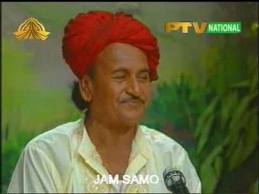
| Sindhi man with traditional 'topi'
Tonight I post the second in this series of ‘forgotten’
heroes of Sindhi music. Master Muhammad Ibrahim is in the
spotlight tonight and I must say it is a dim spotlight indeed. I know
absolutely nothing about this artist except that his name figures in several
lists of Sindhi artists on the internet.
Is he still alive?
This collection came from the same Sindhi bureaucrat who
gifted me Suleman Shah’s music. He
was a funny guy. He had a dignified air about him. Even as the Scotch flowed
into the late night he never lost his senses, and neither did he let his collar
down. Figuratively or sartorially. He breathed contempt for Punjabis as a group
and concept, but seemed on easy terms with all the other men in the room,
Punjabis through and through. I must have heard more than 30 references to Bhuttos of all genders and political
eras throughout the evening. He loved them all as if they were his dearest
relatives.
His other great love was music and literature, which is not
surprising given the others in this badly lit flat on the outer rims of
Islamabad were a prominent novelist and a music industry executive. Sindh’s superior accomplishments in the field
of arts was for him a point that needed no argument but was worthy of frequent
repetition.
Anyway, the next time I see him, if I ever do, I’ll try to
get some background information on Master Muhammad Ibrahim. In the meantime,
enjoy!
As usual, Sindhi speakers, please correct the titles of the songs! Thanks.

Track
Listing:
01. Dilbara
02. Diyan Dinayee Fair Mubarak
03. Karya Yaad Dama Dam
04. Lago Mujhe Andar Aaja
05. Kangala De ka Qabar
06. Subuhanallah
07. Paido Kedo
08. Mohabbat Ye Kare Baqi
09. Yeh Sab Moori Maaya
10. Cho Duniya Ke
11. Jalwe Yaar
|
Showing posts with label Sindh. Show all posts
Showing posts with label Sindh. Show all posts
Thursday, December 15, 2011
Forgotten Singers of Sindh: Master Muhammad Ibrahim


Wednesday, December 14, 2011
Forgotten Singers of Sindh: Suleman Shah (Re-upped)
Suleman Shah
The title of this post will no doubt inflame some readers
because Suleman Shah is not
forgotten at all. In the Pakistani province of Sindh, he was an idol during his
lifetime. And in his death is idolized as one of that culturally lush
country’s celebrated performers.
But he is forgotten in that other than to Sindhi patriots his music has been forgotten by the broader music listening world.
I’ve not been able to find any information of significance
on Shah sahib, except a number of
YouTube videos. All I can report is that
he was apparently born in the provincial town of Mirpur Bhatoro (south of
Hyderabad) and passed away some years ago. If anyone is able to provide more
details on this one-of-a-kind singer please feel free to pipe up and leave a comment
or two at the bottom of the page.

The music is pure Sindhi folk music that draws on mystical
poetry and folk tales as old as the water of the Indus. The singing takes place in a live setting,
perhaps at an open-air mehfil, with Suleman introducing each song with a
bit of wonderfully evocative narrative. This man is a natural storyteller.
Though I understand not a word of Sindhi, I’m totally hooked to the story. I imagine him as an itinerant actor/singer and all round performer, dragging his straggly band of musicians from one village to the next, providing late evening performances for his rural and small town audiences that mix music, religion,
comedy and telling of ancient epics.
In his group you can hear all the instruments of Sindh: the dhol (round drum), the murli (snake charmer’s horn), bansuri (flute), borrindo (clay drum) and yaktoro
(single stringed lute).
Another reason for inflamed feelings will be the titles I’ve
given the tracks. As I’ve confessed earlier I do not speak Sindhi. But I’ve
tried to grab a word or two from each song and use that as the title. I beg, in
advance, forgiveness from all Sindhi speakers and once again request you to
send me the real titles so I can make amends.
A final pretext for being irritated by this post is the
background noise on the first two tracks.
You see, this CD was given to me by a few friends after a night of
drinking Black Dog Whiskey and salacious storytelling (mainly in Punjabi, which
I understood better after a few bara
pegs of Black Dog). How my friends
voices got on to the CD I will never know and I do admit their conversation is
slightly bothersome. But honestly, Suleman
Shah’s singing and storytelling is no match for them and they soon shut up.
So with all these caveats and pre-apologies, I offer you,
ladies and gentlemen the scintillating storytelling/singing of Syed Suleman Shah of Sindh!

Track
Listing:
01 Hayati
02 De Allo
03 Marte Marke Mari
04 Karamadhar
05 Key Nadi Ho
06 Bazaar
07 Asaan to Ishq Balbal Karega
08 Muddat Tarie
09 Ranjha Ja Hazaar
10 Teeran
11 Hanu Barja
Saturday, November 12, 2011
The Wonder That Was Sindh: Mohammad Rafi and Ram Panjwani (Link updated)

Jhulelal, Sindhi Community Diety
Mohammad Rafi was
one of the holy trinity of Indian playback singers that genuinely formed the
soundtrack to India’s first thirty years of Independence. From the late 40’s to
the late 70’s Rafi’s voice along
with those of Lata Mangeshkar and Kishore Kumar filled not only every cinema but bounced off every narrow gali, blasted from every café and
barbershop and wedding celebration across India. And beyond, to Russia, the
Middle East and Africa.
 |
| Mohammad Rafi |
Born near Amritsar but raised in Lahore Rafi was an improbable superstar. His family was not a traditional
musical one and though he began singing publicly at a young age it was not
until he moved to Bombay in the early 1940s that he received training from some
of the greats of Indian khayal
including Ustad Bade Ghulam Ali Khan. But
what he lacked in pedigree he made up for in capability. His first film work was in 1944. Four years
later he was invited by the first PM of India, Jawaharlal Nehru, to sing
at his home.
From then on film work increased with Rafi recording thousands of songs for the Bollywood musical
directors. Some, such as O.P Nayyar,
Naushad and Shankar-Jaikishan
used Rafi almost exclusively at
various stages in their own glorious careers.
I’ve posted some of Rafi
sahib’s film work before and more
will come. But tonight’s post is a record of devotional and spiritual music
sung in Sindhi. As such it is a delightful detour away from
the filmi world with which he is
almost always associated.
The lyrics of these songs comes from some of Sindh’s great
folk and mystical poets: Bulleh Shah,
Shah Latif and Dharamdas. The
music is composed by one of Sindh’s most beloved patriots Dr Ram Panjwani. He’s pictured on the front of the album with Rafi.
 |
| Ram Panjwani (playing drum) |
Panjwani was born in Larkana, the same
district that was the stomping ground of Pakistan’s great Bhutto political dynasty. At
Independence he, with hundreds of thousands other Hindu Sindhis, fled to
India. Pajwani (who was a writer, musician and activist) became a great
organiser of the displaced Sindhis in Bombay and across India. To assist him he
used the Sindhis’ community god, Jhulelal
as a cultural touchstone to give them hope and solace in their ‘exile’.

Dr Panjwani with Abida Parveen
The (very crudely paraphrased) story of Jhulelal is a tale of deux–ex-machina. In the early days of Muslim penetration of
India the Hindu residents of Thatta in Sindh had the misfortune of being ruled
by a Muslim ruler, Mirkshah, who was
aggressive about converting the local population….by force if necessary. Given 40 days to agree to abandon their faith
and convert to Islam, the people of Thatta beseeched their gods for a way out.
On the 40th day a local woman became pregnant and eventually gave
birth to a boy child. From the infant’s mouth flowed the Indus River and on the
river riding a fish was an old man with a long beard.
The child/man was able to convince the Mirkshah’s vizier that he was indeed a spiritual being and
eventually when confronted with Jhulelal’s
powers Mirkshah himself relented and
let the people keep their Hindu faith.
When Jhulelal, also
known as Uderolal, died Muslims
insisted upon erecting a mini ‘kaba’
in his honor. The Hindus insisted upon a temple. Fighting ensued. Suddenly from
on high a voice was heard, “ Behold! You shall make my shrine acceptable to
both Hindus and Muslims. Let one face be a temple and the other a dargah (Sufi shrine).”
The story is rich with Sindhi syncretic thinking. Indeed,
the vast countryside of what is now Pakistan was for centuries the home of a
highly syncretic culture and religious practice. Sufi poetry is appreciated by
Hindu Sindhis as much as Muslims and Jhulelal
is so revered by Sindhis of all persuasions, the phrase “Jhulelal beera hee paar” is a standard
greeting between Sindhis wherever they are in the world.
And
of especial interest to the Washerman’s
Dog is the frequent reference to Jhulelal in that great Sufi qawwali Dama Dam Mast Qalandar.
So
it is with great pleasure tonight I post Hindu and Muslim spirituals from Sindh
sung by a Muslim set to music composed by a Hindu who revered the tolerant diety
of Sindh who wanted his resting place to be half Hindu half Muslim.
The
Wonder That Was Sindh!


Track Listing:
01
Kahdi Karyan Mahmani (Sachal)
02 Badal Aaaya Bahar
Miyan (Bhojal)
03 Jeko Sabhai Siyaka
Satte (Roshan)
04 Hee Aashikan Ja Insaf
(Dharmdas)
05 Tu Aheen Sahib
(Sachal)
06 Dardan Ji Mari (Shah)
07 Kiya Janey Dum Koi
(Bulleh Shah)
08 Kalangi Wara Lal
(Ram)
Subscribe to:
Posts (Atom)