 |
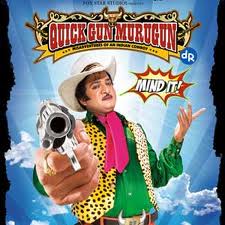
| Quick Gun Murugun
We’ve had spaghetti westerns
and Rhinestone cowboys. But a few years ago India introduced the world to the
first masala dosa cowboy, Quick Gun Murugun.
Quick Gun Murugun is the protagonist of a 2009 south Indian western film of the same
name. It is a hilariously riotous
tongue-in-cheek piece of cinematic buffoonery starring one of Dravidian
cinema’s most beloved leading men, Rajendra
Prasad as a cowboy whose holy mission is to defend the Holy Cows of India.

Quick Gun Murugun is an unlikely superhero, a South Indian Tamil cowboy whose duty is to
protect the world against arch villain restaurant owner, Rice Plate Reddy (played by Nassar). The movie
revolves around adventures of Quick Gun
Murugun along with Rice Plate
Reddy’s girl friend Mango Dolly
(played by Rambha), who has a
secret crush on Quick Gun, and Locket Lover (played by Anu Menon).
Murugan is
just an ordinary vegetarian cowboy who is killed in a battle with Rice Plate Reddy. He goes to heaven but
25 years later returns reincarnated as Quick
Gun Murugun, with a mission given to him directly by God in Heaven: Make the world safe for vegetarianism. He
returns, with snappy clothes, a big hat and phrases like, “Mind it!”, ‘'We are
like this only” and “Vegetarianism is
the need of the hour!”

Quick Gun Murugun discovers, upon his return to earth that Rice Plate Reddy is still at it and is on his own mission to create
a chain of McDosa restaurants where the speciality is a meat dosa! The two rivals battle it out in a
series of gun battles including one in a Chennai traffic jam!

Mango Dolly
gets hit by a bullet and while dying, she expresses her love to Murugun. Realising that he too loves Mango Dolly, he tells her that he loves
her and she can "stay with him". In the end, having won the heart of
his moll, Quick Gun Murugun is able
to succeed in his vegetarian mission and defeats the wily and villainous Rice Plate Reddy.
The film was a flop when it
first came out but soon caught on and became a cultish favorite at film
festivals in the US and Europe. Its irreverence and OTT storyline which
lampoons nearly every cultural icon of Tamil and south Indian culture from
Murugan, the Tamilians favorite diety, to vegetarianism, reincarnation and the
humble but delicious snack, the dosa
breaks new comedic ground. The confidence with which it is brought off reflects
very smartly the new young, daring India.
No longer is Bollywood comedy all inside jokes and vernacular punning,
funny only to Indians. This film takes on and then quickly disposes of
Spaghetti Westerns, Bollywood heroes and villains, the Hindu pantheon and
McDonalds with a cocky swagger and a funky, hilarious creole of Tamil, Hindi
and very exaggerated Indian English.

The music is just as electic
and electric. Bits of dialogue set to heavy house beats, Tamil rap, country and
western ballads reminiscent of Sergio Leone soundtracks with Mexicali trumpets
and disco beats all tell the story of this most unlikely of superheroes and his
quest for dietary purity and pure love.
Not only is the music first class but the lyrics, sung in Hindi, Tamil
and English poke fun not just at the characters but at the very languages
themselves. They are sung and spoken in a way that completely takes the piss
out of all three. Given that there were once upon a time, riots in the streets
of Chennai against the imposition of Hindi as the national language and English
is the old colonial language, these songs underline just how far India has
travelled.
It is quite simply the most
fun I’ve had in months and out shines the excellent Bombay Connection series by
the length several special paper dosas. If you love Bollywood funk and pop, then you
can’t miss this.
Track Listing:
01 Dialogue Mix
02 Murugun Superstar
03 Mind It (Tamil Bhangra)
04 Kyoon Keeda Hai Aapko
05 Ek Tha Murugun
06 Chat Mangni Lover
07 Kuchi Kuchi Twist
08 Naam Mera Mango Dolly
09 Space Goddess (Chat Mangni Remix)
10 Mind It (Club Mix)
11 Aunties On The Dance Floor (Chat
Mangni Remix)
12 Ragamuffin Mix
Listen here.
|
Showing posts with label Tamil. Show all posts
Showing posts with label Tamil. Show all posts
Wednesday, February 15, 2012
Masala Dosa Cowboy: Quick Gun Murugun


Wednesday, January 11, 2012
Nice Catholic Boy Proves Mother Wrong: Vijaya Anand

Tamil film poster
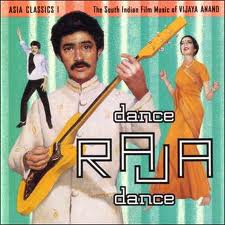
Tonight’s feature is
Carnatic music with a difference. Actually it is only Carnatic in that it comes
from South India. In actuality it is pop music.
Long before A.R. Rahman was known to Western
audiences and many years before the current craze for Bollywood funk/pop/jazz
filled the blogosphere, soundtracks and record racks David Byrne, chief Talking
Head, introduced the music of Jude
Mathew to American ears.
Jude who?
Jude Mathew,
aka Vijaya Anand, is an early
pioneering musical director of Tamil films who ground together instruments,
beats, rhythms and styles as if he were a musical chef concocting an
outrageously spicy curry. Born into a
family of serious, practicing Catholics in Madras (Chennai) in 1952, Jude was bewitched by music from a very
young age.
It is much easier to stumble
upon movies in the process of being made in India than in other countries and
near Jude’s house was a place where a movie orchestra rehearsed. The youngster visited regularly and tried to
get his parents to agree to buying him an instrument. They refused. ‘Education
is the future,’ they told him. ‘Forget this movie nonsense.’ But they ultimately did crack a bit and
bought him a set of bongos to stop his pestering.
 |
| A rare photo of Mr Anand |
He practiced his bongos and
played them for the conductor the orchestra who was immediately impressed.
Little Jude was invited to join the
group. He was 8 years old! His mother
blanched and tried her best to discourage what appeared to be the beginning of
the slippery road to hell. But his dad
was converted and agreed to let him continue to hang out with the orchestra.
A mother’s intuition is
usually right. And so it was in this case. Jude
announced he preferred music to education at the end of high school and
formed a group he called the Melody Cans who performed the music of Tamil movies widely across Madras. You start off smoking soft drugs and soon
you’re addicted to the hard stuff. And so our hero soon got bored with playing other
people’s music and turned his restless spirit to composing his own music.
Breaking into the
conservative Madrasi film studio world was hard. The films he worked on were flops or never
made to the cinemas. Producers ran out of money. Actors died. Jude quit music
and took up a job as machinist. The long commute to work and horrible hours and
working conditions nearly sucked his creativity dry. He took up a
diploma course in Western Classical Music conducted at the Trinity College of
Music, London. The classes were held in a musical instruments shop called Musi
Musicals in the heart of Madras. Here, Vijaya
learned theory, piano and classical guitar. He also took classes in South
Indian Carnatic music from Mr. Jalatharangam
Radhakrishnan, a noted master.
But somehow when he had the energy he did his music and found some work
composing music for Tamil stage plays. This led eventually back to the film
studios in the mid 1980s. With the support of a prominent local actor, he
changed his name to Vijaya Anand.
Perhaps that did it. But however it happened he was suddenly scoring all sorts of
south Indian films. Though a native Tamilian, he wrote songs for Telegu and
especially Kannada films, a language he didn’t speak!
To say Anand’s music is
electric is to but scratch the surface of his style. Here you will hear,
xylophones, sax played like a shenai, inerludes of Hawaiian guitar, jazz
trumpets, synths, wild screaming guitars and something that sounds like door
bells. The songs are fast and melodic.
If listening to them is so much fun imagine what composing them must have been
like. A bit of this, some of that and lots of the other. More more more!!!!
Here are the roots of A.R. Rahman.
The music is bombastic, ambitious, orchestral-disco and grasping for greatness
which it usually achieves.
Vijaya Anand’s opinion about his
own music is very candid. “I am just a music lover. We so-called ‘masters’ like
Beethoven, Bach and Thiagaraja Swamy
(a South Indian classical music composer from the 18th century) draw from these
rich sounds and blend them together to suit the taste of our audience.” For Vijaya Anand, creating an exciting
blend of music is a cinch.
Track Listing:
01 (The Light of Life)
Dancing Is Beautiful
02 (The Emperor and the
Prince) I Am the Emperor
03 (The Ramayana of Today)
Desire Soars Up High
04 (God Incarnated) Loving
Hearts
05 (Dance Raja Dance) Only
You Were Mine
06 (I'm Not That Kind of Guy)
Love Is Everywhere
07 (Inspector Vikram) When I
Say Come
08 (The Emperor and the
Prince) I Said I Love You
09 (Krishna, When You Danced)
Dheem Thana Thana Nana
10 (The Ramayana of Today)
Lover You Speak Beautiful Words
11 (King of Kings) The Drink
That Has Gone Up
Listen here
Thursday, July 7, 2011
Stone Genius: A.R. Rahman
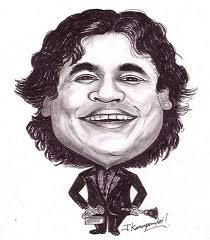 |
| A.R. Rahman From Hindi disco of the 1980s to Indian pop of today. The name A.R. Rahman is near enough to being of the household variety as any other out of Bollywood. Most of his American and Australian fans only realised who he was when the triumphant anthem Jai Ho from Slumdog Millionaire climbed to the tops of the pop charts from Tucson to Tokyo. But the diminutive musical genius from the city once known as Madras (Chennai, these days) has been in the business of composing some of the most sophisticated pop music even before his ‘discovery’ by the Tamil film industry in 1991. Born into a high caste Hindu family, Rahman’s parents were involved in the musical side of the south Indian film industry based in Chennai. As a youngster, Dileep Kumar (his given name), accompanied his father to the studios and played various instruments on some of his compositions. His father died when the boy was only 9 but he never considered any other profession than the one he had been exposed to by his dad. In 1988, one of his sisters fell seriously ill and in spite of the family's effort to cure her, her health deteriorated. The family consulted a Muslim pir - Sheik Abdul Qadir Jeelani or Pir Qadri. At first blush, this seems an unusual step for a Hindu family, but when one considers Dileep’s mother had Muslim roots, a perfectly natural thing to do. The holy man’s prayers and blessings saw the girl make a ‘miraculous’ recovery. In response Dileep, his mother and his sisters converted to Islam and the young boy took the name Allah Rakha Rahman.  Rahman’s musical journey saw him forming a rock ‘n roll band (Nemesis Avenue) with college friends and recording his first album in English in the late 1980’s. As is required of all artists, dues had to be paid, and Rahman worked in the jingle jungle writing musical ditties for companies pedaling everything from motorbikes and paint to breakfast drinks and watches. He spent time travelling internationally as a member of the great tabla player, Zakhir Hussain’s, band before returning to Chennai. When he won the local advertising industry’s top award in 1991 one of the Tamil film industry’s most famous directors, Mani Ratnam asked him to score his film Roja. In composing the song Tamizha Tamizha which became all the rage Rahman gave the public a glimpse of the amazing fusion of pop, Western Classical, reggae, rock, and classical Indian music that would make him one of the world’s most imaginative composers. The film won him three awards for Best Music Director.  Since then he has simply dominated the film industry of India like no one before. He has moved from the southern film industry to the mothership, in Mumbai, but continues to compose an amazing range of music for Indian and western audiences. He has performed for President Obama, and with Michael Jackson and Mick Jagger. Andrew Lloyd Webber produced his musical Bombay Dreams, which ran to rave reviews for two years. The accolades seem endless and yet from everything I’ve read or heard he remains a man of great humility. Baz Luhrmann, the Australian director, of such musical extravaganzas as Romeo and Juliet and Moulin Rouge, sums up Rahman’s incredible talent: I had come to the music of A. R. Rahman through the emotional and haunting score of Bombay and the wit and celebration of Lagaan. But the more of AR's music I encountered the more I was to be amazed at the sheer diversity of styles: from swinging brass bands to triumphant anthems; from joyous pop to West-End musicals. Whatever the style, A. R. Rahman's music always possesses a profound sense of humanity and spirit, qualities that inspire me the most. I picked up this collection of his ‘Best’ from a friend in Kerala several years ago. The set is entirely from his Tamil and Malayalam films but the diversity, humanity and spirit that Luhrmann refers to comes through strong and clear. I know three words of Tamil. But this is (honestly) one of my favorite records of the many thousands I am proud to own. If you know only his Hindi or recent music or if you know his music not at all, please dip in and discover. You will not be disappointed.   Track Listing: 01 Baba Theme Music 02 Mustafa Mustafa 03 Shakalaka Baby 04 Kaadhalennum 05 Lucky Lucky 06 Sakhti Kodu 07 Velli Malare 08 Santosha Kanneere 09 Kaiyil Mithakkum 10 Rajyama 11 Kaadhal Vettukili 12 Muthalavanae Listen here |
Subscribe to:
Posts (Atom)