Showing posts with label Folk. Show all posts

Tuesday, July 24, 2012

I Ain't Got Long: The Real Bahamas


What is REAL music?  For my money it is music that comes straight from the inner part of the human soul where there is no self-consciousness, only joy.  It comes through the heart and tumbles out of the mouth and doesn’t even need instruments.   You hear it in religious chants, work songs, tribal celebrations and even when the drunks stumble home early in the morning. In India I heard it in the voice of the blind beggars who sang for alms.

It has nothing to do with polish or production. Only soul and closed eyes are required. The album we highlight tonight is about as close as you can get to the bone without killing the singer. It is pure music, unadulterated, simple and very complex and absolutely non-negotiable. Though it is sung by ‘uneducated’ probably, barely literate people who are unafraid to laugh, cough, growl and shout as they sing the music they make sounds as if it came out of the very first volcano on earth. It is hot, cutting and unrelenting. So uplifting and moving too.

It is a collection of gospel ditties, sea shanties and parables from the Bahamas sung by itinerant preachers, pick up guitarists and very powerful speakers of truth.  Many of the songs are sung by various members of the Pinder family about which I was able to find this lovely portrait.

The Pinder Family lived in the Bahamas and were descended if not in blood then certainly in spirit from a long line of Island musicians.
Joseph Spence

Joseph Spence played the guitar and sang, if you can call it that. It's hard to say exactly what he did.
He grunted.
He snorted.
He made low guttural noises, and then would suddenly break into a demented scat.
He would be singing along and his English would descend into complete nonsensical gibberish.
Sometimes he almost sounded like Popeye. But whatever it was he was doing*, you could tell he meant business.
They say he looked like he was going into a trance when he played. The man was almost certainly filled with the Spirit.
And his guitar playing was phenomenal.
Sometimes even to this day while listening to him I wonder if my ears might be playing tricks on me.
Paired along with his voice, his guitar playing could weave incredibly complex rhythms and produce some of the most intriguing music I've ever heard to this day. His lackadaisical and carefree (almost irreverent) style is guaranteed to lighten any mood, and to hear his laugh always puts a smile on my face. Most people unfortunately would dismiss this sort of music offhand, if not because it seemed strange and exotic (and perhaps even frightening!), then because much of it was gospel. But any musician, or anybody with an ear for good music for that matter should immediately recognize its value.

*Actually, the Bahamians refer to this style of singing as "rhyming", and it could almost be considered a precursor to modern rap.

The Pinder family often accompanied Spence, and together they were nothing short of a veritable music machine. Edith sang in a powerfully deep and throaty tenor that reminds me of a Jamaican reggae singer. Her husband Raymond provided a deep and rich bass, while their daughter Geneva warbled along in a flighty treble. You just have to hear them to understand, but I'm telling you it's unbelievable stuff. They sang with an incredible intensity that at times can be almost overwhelming to listen to. The music is simple, but the complexities are astounding. It's truly a wonder to behold. If you've ever heard The Incredible String Band or The Grateful Dead performing their versions of "I Bid You Goodnight" then you've heard their tribute to the Pinder Family. These groups heard the song on an album called The Real Bahamas, a 1965 Nonesuch Records release which has since been re-released. Other musicians who claim Joseph Spence as an influence include Ry Cooder and Taj Mahal, both of whom had the pleasurey to meet and play with him before his death in 1984. (http://spence.bryandeno.net/)

This is where the blues came from. Where almost every form of music in America came from. This could be 1760 rather than 1960.  Phenomenal!


            Track Listing.
            01 We'll Understand It Better By And By
02 Sheep Know When Thy Shepherd Calling
03 I Told You People Judgement Coming
04 Don't Take Everybody To Be Your Friend
05 Sailboat Malarkey
06 Up In The Heaven Shouting
07 Won't That Be A Happy Time
08 Out On The Rolling Sea
09 I Am So Glad
10 Come For Your Dinner
11 God Locked The Lion's Jaw
12 Great Dream From Heaven
13 My Lord Help Me To Pray
14 Numberless As The Sands On The Seashore
15 I Ain't Got Long
16 I Bid You Goodnight
17 Mary And Joseph
18 Peter, You Need The Lord
19 Jesus Promised Me A Home Over There
20 Troublesome Water
21 Kneeling Down Inside The Gate
22 Jesus Your Name So Sweet
23 Take Me Over The Tide
24 When The Leaves Turn Red
25 That Glad Reunion Day
26 The Great Coronation
27 The Captain Go Ashore
28 Ain't No Grave Gonna Hold God's Body Down

Monday, July 16, 2012

Notes from the Underground: Vladimir Vissotski

Vladimir Vissotski

This album opens with the intensity of a Soviet border guard screaming at you because you’ve not got the right signature on the right page of your passport.  Indeed, if it were possible to bottle intensity the label would read, Vladimir Vissotski.  Russia’s peerless underground, tortured soul, Vladimir Vissotski was adored by millions of his countrymen and women for his artistic integrity and raw but empathetic lyrics. The same qualities saw him ignored and hounded by the State Art Establishment. In his powerful vocal rasp he held the repressed frustrations, secret joys and anxious hopes of countless Soviet citizens.

Born into a difficult period of history-- his country was at war, so were his parents—he knew life on the edge from an early age. The dramatic was his natural way; he stood on chairs and made precious announcements and recitations for adults from the age of 3.  Smart as a whistle too. Vladimir earned straight A’s in school and after graduation moved immediately toward the stage.  His acting ability was instantly recognised and by the late 50’s/early 60’s he was getting regular roles in film and in the theatre. They were regular but not very serious or weighty and in 1963 he managed to make a homemade tape of some his songs.  They were so authentic as to cause commentators to claim they were ‘traditional anonymous folk’. The tape, and subsequent ones, became what we would consider today, ‘cult’ hits. They were passed, like Khomeini’s sermons, from hand to hand all across the Soviet Union. 

The songs told tales of criminals, the broken spirits of those in the gulags, sailors and society’s misfits. Very often they poked fun at the government and elites and included wry and social comment.  Official Communist media spurned him as ‘anti-Soviet scum’ and refused to make a recording of his songs, though he was by far the best-loved and most listened to singer in the USSR. He continued to sing wherever he was welcome, whether in someone’s flat, or in a factory.  And he kept on acting. Many of his performances are still considered some of the best in modern Russian cinema and theatre.  He also toured extensively across the Soviet Union, finding an especially warm reception in Central Asia where the authorities lauded him and gave him an award. Finding it impossible to ignore him, the State record label, Melodiya, finally issued one record of his songs in the mid-1970s but did nothing to promote him. 

Around the same time he was getting attention from fans in Europe and even the USA where he toured in the mid and late 1970s. Though he had no official ‘permission’ for many of these tours, the Soviet authorities did not pursue him, and Vissotski for his part refused to be labelled a dissident.  In one French interview he declared himself to be "not a dissident, just an artist", who's never had any intentions to leave his country where people loved him and his songs.  It is said that Breshnev himself, used to listen to Vissotski’s music, which probably saved the singer’s skin more than once.

His rough and tumble life and living constantly in the shadows at home meant he had repeated fallings-out with theatre and film directors. He drank heavily and by the late 70s was being kept in a prescription-drug fog by an avaricious circle of hangers-on and Drs. Feelgood.  While on tour in Uzbekistan in 1979 he collapsed and was declared clinically dead but recovered and went on to perform sporadically until he finally succumbed to the big sleep in 1980 at the age of 42.  His friends and family refused an autopsy, fearful of being indicted for criminally procuring and administering drugs.

Vissotski sings in a grand Russian style with an aggressive baritone but one that is agile enough to take the voice of a whole cast of characters. His songs are often conversations between people  and full of wry humor.  There is a latent Slavic cynicism in many of them.  Sometimes referred to as Russia’s Bob Dylan, his impact is probably even more impressive than his American colleague.  Not only popular song, but theatre and cinema not to mention popular culture have all been shaped by Vladimir Vissotski.


Track Listing:
01 The Monument
02 Meet The Bride
03 Dialogue In Front Of The TV Set
04 Comrade Scientists
05 A Long Drawn Out Jump
06 Skull And Crossbones
07 Of The Sea
08 Two Scruffy Ships
09 Evening Storm
10 Chances
11 I Walked Out Of A Fine Deal
12 The Ballad Of The Short Neck
13 Condemned To Life
14 A Soldier's Song
15 Chastushki (4-Verse Limericks)
16 The Chess Crown Contest_ 1. Training
17 The Chess Crown Contest_ 2. The Match
18 Who's Racing After What
19 The Ballad Of The Departure For Paradise
20 And The Candles Are Melting


Wednesday, June 20, 2012

Living Dangerously in 1974: Maria Muldaur and Gordon Lightfoot


In the summer of 1974 I was 17. I had spent the previous twelve months living in a double wide trailer in the backyard of a big house in a tiny town called Wilmore in Kentucky.  It had been a big year for me.  Arriving in the USA from India in the summer of ‘73 gave rise to feelings of excitement and possibility. I had reached that age in life when I had my first job (painting houses) and a burning intention to spend my wages. 

All I wanted then (and still) was records.  In India American pop records were hard to find and pretty expensive to buy although I by the time I got off the plane I was aware of David Bowie and Alice Cooper but was bowled over by the what was available in the stores. 

That year I fell in love and had my heart broken by an older college girl. I had a couple of intense spiritual experiences which saw me join the lingering tribe of Jesus Freaks. I discovered existential doubt and learned how to ride a motorbike.  The Allman Brothers, 3 Dog Night, Ringo Starr, ZZ Top, Elton John and Neil Young dominated the airwaves.  My face broke out like a pepperoni pizza on steroids and I discovered a black soul singer named Al Green.

By the summer of 1974 I was ready to head home to India and my final year of high school. I had grown up several years in those 12 months and was totally psyched about getting back to Mussoorie to share all this new music and show off my red and yellow scotch plaid seersucker bellbottom pants.

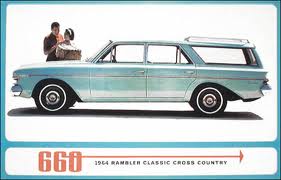
One June morning our family packed up the trailer’s contents into the back of an old Rambler station wagon and headed out for Minnesota where our cousins lived. I had my driver’s license and was scheduled to drive the midday shift.  When we stopped for gas and I was about to get behind the wheel my dad said, “Not yet.” He nodded to my soon to be brother in law to drive.  I was hurt and sat sulking in the back seat.   About a half hour later a rear tyre blew up sending the station wagon careening wildly down the interstate.  We screeched to a smoky halt with our hearts in our mouths.  I caught my dad’s eye. We both understood that if it had been me behind the wheel I would have panicked, jammed the brakes, flipped the car and probably sent us all to Glory.

Intuition saves the day.

We eventually made it to Minneapolis a couple days later. After a few weeks we drove east to Indiana where I left my folks and caught a plane back home to India.  We travelled many hot hours in that station wagon all across the United States that summer. And except for that one experience had nary a problem or near miss.  The two hits of that summer were Midnight at the Oasis by Maria Muldaur and Sundown by Gordon Lightfoot. Two very different sounding songs about love and sex and the joys and dangers thereof. 

Can’t remember them?

Here you go!


            Track Listing (Maria Maldaur)
            01 Any Old Time
02 Midnight At The Oasis
03 My Tennessee Mountain Home
04 I Never Did Sing You A Love Song
05 The Work Song
06 Don't You Make Me High (Don't You Feel My Leg)
07 Walkin' One & Only
08 Long Hard Climb
09 Three Dollar Bill
10 Vaudeville Man
11 Mad Mad Me


            Track Listing (Gordon Lightfoot)
            01 Somewhere U.S.A
02 High And Dry
03 Seven Island Suite
04 Circle Of Steel
05 Is There Anyone Home
06 The Watchman's Gone
07 Sundown
08 Carefree Highway
09 The List
10 Too Late For Prayin'